Introduction
The Bhimashankar trek is a rare journey where a wild jungle climb ends at a sacred summit. You start deep in a wildlife sanctuary, wind through thick forest alive with birdsong and the flash of the Malabar Giant Squirrel, cross streams and iron ladders, and finish at the ancient Bhimashankar Jyotirlinga temple, one of the twelve holiest shrines of Lord Shiva.
Set in the lush Bhimashankar Wildlife Sanctuary near Khandas village, this trek offers two classic routes: the gradual Ganesh Ghat and the steeper, ladder-laced Shidi Ghat. Both reward you with dense forest, waterfalls in monsoon, and a deeply satisfying blend of nature, adventure, and devotion.
This guide covers both routes, difficulty, the wildlife sanctuary, the Jyotirlinga temple, stay, transport, and the safety tips that make this jungle pilgrimage-trek so memorable.
Table of Contents
- Where Bhimashankar Is Located
- The Bhimashankar Jyotirlinga
- Into the Wildlife Sanctuary
- Trek Routes: Ganesh Ghat vs Shidi Ghat
- Difficulty Level and Who It Suits
- Wildlife You Might See
- How to Reach Bhimashankar
- Best Time to Visit
- Food, Water, and Stay
- Safety Tips
- Practical Tips
- Common Mistakes
- Expert Insights
- Frequently Asked Questions
- Ready for Your Next Adventure?
Where Bhimashankar Is Located
Bhimashankar lies in the Sahyadri hills of Pune district, Maharashtra, within the protected Bhimashankar Wildlife Sanctuary. The trek's common starting point is Khandas village, reached from the Karjat side.
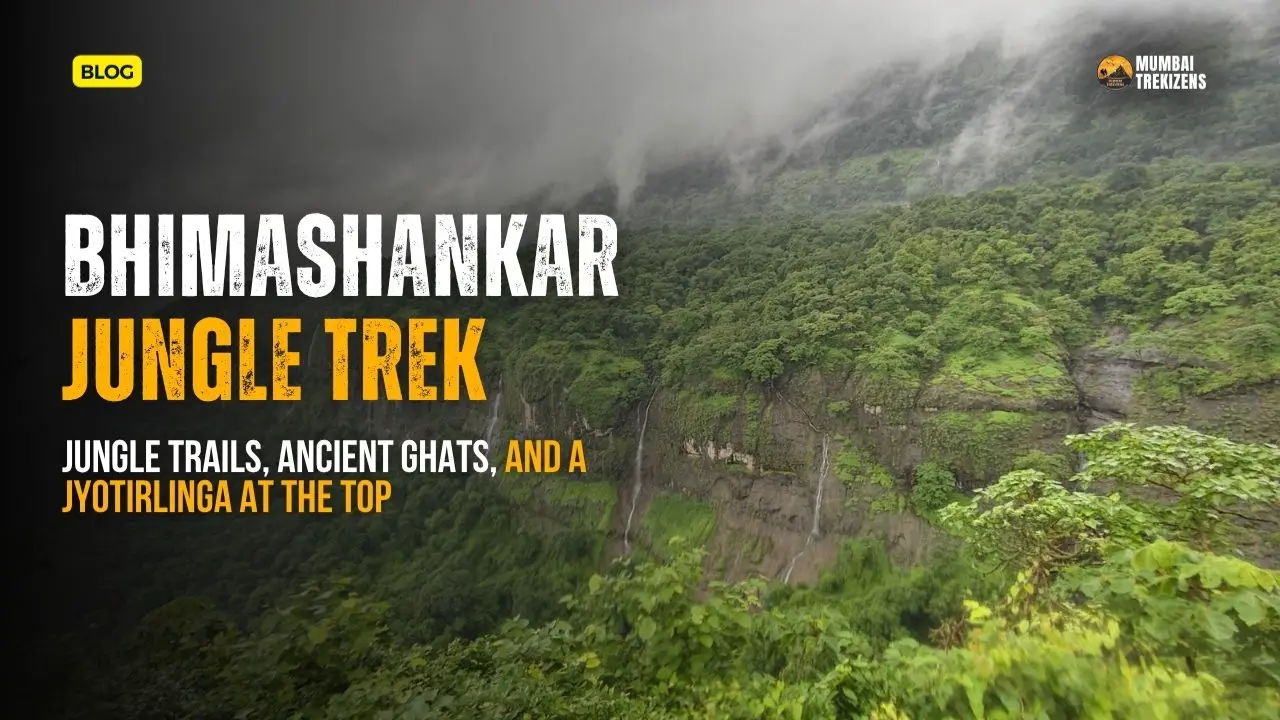
The area is the source of the Bhima River and is one of the greenest, most biodiverse stretches of the Western Ghats. Dense forest, streams, and waterfalls define the landscape, and the sanctuary is famous for protecting the Malabar Giant Squirrel, Maharashtra's state animal.
At the top sits the temple town of Bhimashankar, also reachable by road, which means many pilgrims arrive by vehicle while trekkers earn the summit on foot through the forest.
The Bhimashankar Jyotirlinga
The Bhimashankar temple is believed to be over a thousand years old and is one of the twelve Jyotirlingas, the most sacred shrines dedicated to Lord Shiva. Reaching this ancient temple on foot, after a forest climb, gives the trek a profound sense of pilgrimage.
The temple is built in the Nagara style of architecture and draws devotees from across India, especially during Mahashivratri and the Shravan month. For trekkers, arriving at a living, revered shrine after hours in the wild adds a layer of meaning that few treks can match.
A note of respect: since this is an active place of worship, dress modestly, keep noise down near the temple, and follow local customs. Darshan timings, aarti details, and any special arrangements should be verified with official temple sources, as they can change. The temple here is one of the state's revered Jyotirlingas — you can read about all the Jyotirlingas in Maharashtra and their significance.
Into the Wildlife Sanctuary
The trek passes through the Bhimashankar Wildlife Sanctuary, a thickly forested, biodiverse reserve. This is a big part of the trek's magic: you're walking through a genuine wild forest, not just up a bare hill.
What the sanctuary offers:
- Dense, shaded forest that stays cool and green.
- Streams and monsoon waterfalls along the trails.
- Rich birdlife and the chance to spot the Malabar Giant Squirrel (Shekru).
- A sense of untouched wilderness rare so close to a city.
Because it's a protected sanctuary, trekkers should stay on trails, avoid disturbing wildlife, never feed animals, and carry out all waste. Respecting the forest keeps it wild for everyone who follows.
Trek Routes: Ganesh Ghat vs Shidi Ghat
Two classic routes climb from Khandas to Bhimashankar, and choosing between them shapes your adventure.
Ganesh Ghat Route (the gradual one)
- Character: a longer, more gradual trail that opens into meadows before heading back into forest.
- Distance/time: roughly a 13 km round trip, with about 5 to 6 hours of ascent and around 4 hours of descent.
- Difficulty: moderate to difficult, gradual but long, and slippery in monsoon.
- Best for: those who prefer a steady climb without technical ladder sections.
Shidi Ghat Route (the adventurous one)
- Character: steeper and more technical, named for the "shidi" (ladder) step-like structures trekkers cross.
- Features: iron ladders, rocky sections, and stream crossings.
- Difficulty: moderate to difficult, thanks to the ladders and technical patches.
- Best for: fitter, more adventurous trekkers comfortable with ladders and exposure.
| Feature | Ganesh Ghat | Shidi Ghat |
|---|---|---|
| Character | Gradual, long | Steep, technical |
| Key feature | Meadows, forest | Iron ladders, rock |
| Difficulty | Moderate to difficult | Moderate to difficult |
| Best for | Steady climbers | Adventure seekers |
A popular plan is to ascend via the steeper Shidi Ghat and descend via the gentler Ganesh Ghat, giving you the best of both, though this needs good fitness and daylight. In monsoon, both routes get slippery and the ladders demand extra care.
Difficulty Level and Who It Suits
The Bhimashankar trek is rated moderate to difficult on both routes, thanks to the distance, the forest terrain, the ladders (Shidi Ghat), and monsoon slipperiness.
- Suitable for: trekkers with good fitness and stamina; the Shidi Ghat especially suits those comfortable with ladders and heights.
- Needs care: the iron ladders and technical sections of Shidi Ghat, stream crossings, and slippery monsoon trails.
- Less ideal for: absolute beginners going independently, especially in monsoon.
This is more demanding than easy forts like Lohagad. Good endurance and proper trekking shoes are essential. For beginners drawn to it, the safest approach is going with an experienced group who can guide the ladder sections and manage the long forest route.
Wildlife You Might See
One of the joys of Bhimashankar is the wildlife. The sanctuary is a haven, and a quiet, attentive trekker is often rewarded.
Commonly spotted:
- Malabar Giant Squirrel (Shekru), Maharashtra's colorful state animal, leaping through the canopy.
- Langurs and other monkeys in the forest.
- Spotted deer in quieter stretches.
- A wide variety of birds, making it a birdwatcher's delight.
Wildlife etiquette:
- Never feed the animals, especially monkeys, which harms them and creates problems.
- Keep noise low to increase your chances of sightings and to respect the forest.
- Don't litter; food waste draws animals into unhealthy habits.
- Observe from a distance and never chase or corner wildlife.
Spotting a bright Malabar Giant Squirrel high in the trees is a highlight many trekkers remember long after the climb. Since this is a protected sanctuary, it helps to brush up on wildlife safety on Sahyadri treks before you go.
How to Reach Bhimashankar
To the Trek Start (Khandas)
- Khandas village near Karjat is the common starting point for both routes.
- Reach Karjat by train (on the Mumbai-Pune line) or road, then travel to Khandas by local transport or vehicle.
From Mumbai
- By road toward Karjat and Khandas (roughly 3 to 4 hours to the base).
From Pune
- By road toward Bhimashankar/Khandas (roughly 3.5 to 4.5 hours depending on the side).
By Road to the Top (for pilgrims/return)
- Bhimashankar temple town is also connected by road, so many trekkers arrange a vehicle down from the top, or pilgrims arrive by bus/car directly.
Note: A common plan is to trek up from Khandas and return by road transport from the temple town, or vice versa. Arrange this in advance, as the trek and the road are on different sides. Confirm transport timings, especially for the descent.
Best Time to Visit
- Monsoon (June to September): Breathtakingly green, with full waterfalls and lush forest. The most beautiful and popular season, but trails and ladders get very slippery, so it demands care and ideally a guided group.
- Post-monsoon and winter (October to February): Pleasant, cool, and green, with safer footing and comfortable trekking. Excellent for wildlife spotting.
- Summer (March to May): Hotter, though the forest offers shade; carry plenty of water and start early.
Monsoon is the signature Bhimashankar experience for its waterfalls and greenery, while post-monsoon and winter offer the best mix of comfort and safety.
Food, Water, and Stay
Food and water: The temple town at the top has eateries, stalls, and prasad, so meals are available once you summit. On the trail itself, options are limited, so carry your own water (2 to 3 liters) and high-energy snacks. Stream water should be treated before drinking.
Stay options:
- Lodges and dharamshalas in Bhimashankar temple town for pilgrims and trekkers.
- Basic homestays near Khandas at the base.
- Many trekkers do it as a long day trip, trekking up and returning by road.
Staying overnight at the top lets you attend an early aarti and rest before the journey back, a nice option for those wanting the full pilgrimage-trek experience.
Safety Tips
- Wear sturdy trekking shoes with strong grip; the forest trails and ladders get slippery.
- Take the Shidi Ghat ladders one at a time with a firm grip.
- Cross streams carefully, especially in monsoon when they swell.
- Start early to complete the long route with daylight to spare.
- Carry 2 to 3 liters of water and treat any stream water.
- Don't feed or provoke wildlife, and keep food secured from monkeys.
- Check the weather and be cautious on ladders and streams in heavy rain.
- Arrange return transport from the top in advance.
Given the length, the ladders, the stream crossings, and the wildlife sanctuary setting, this is a trek where going with an experienced organizer adds real safety and smooths the logistics, especially in monsoon.
Practical Tips
- Ascend Shidi Ghat, descend Ganesh Ghat for variety (if fit and starting early).
- Combine trek and darshan: climb up, then visit the Jyotirlinga temple.
- Verify darshan and aarti timings with official temple sources before you go.
- Carry cash for the base village and temple town.
- Keep quiet on the trail for better wildlife sightings.
- Dress modestly for the temple visit.
- Carry out all trash to protect the sanctuary.
Common Mistakes
- Underestimating the length, treating a 13 km forest route casually.
- Attempting the Shidi Ghat ladders in worn shoes or in a rush.
- Starting late and getting caught out on the long trail after dark.
- Feeding monkeys or littering in a protected sanctuary.
- Not treating stream water before drinking.
- Failing to arrange return transport from the temple town.
- Ignoring monsoon conditions on slippery ladders and swollen streams.
- Disrespecting temple customs at the summit.
Expert Insights
Trek leaders cherish Bhimashankar for its unique combination of wild jungle and sacred summit. Few treks in Maharashtra take you through such dense, wildlife-rich forest and finish at one of the twelve Jyotirlingas. That blend of adventure and devotion makes it deeply rewarding.
They're clear that this is not a casual beginner walk, particularly the Shidi Ghat route. The iron ladders, technical rock, stream crossings, and sheer length demand fitness and care, and monsoon multiplies the challenge. Their advice for newer trekkers is to go with an experienced group that knows the ladders, the route, and the sanctuary rules.
Their favorite reminder is about the sanctuary itself. Bhimashankar is a living forest, and the quiet trekker who respects it, keeping noise low, never feeding animals, carrying out waste, is the one who gets rewarded with a Malabar Giant Squirrel sighting and a truly wild experience. Treating the forest and the temple with equal respect is what makes this trek special.
Frequently Asked Questions
1. How difficult is the Bhimashankar trek? It's rated moderate to difficult on both routes. Ganesh Ghat is gradual but long (about 13 km round trip), while Shidi Ghat is steeper with iron ladders and technical sections. Good fitness and grippy shoes are essential.
2. What's the difference between Ganesh Ghat and Shidi Ghat? Ganesh Ghat is a longer, gradual trail through meadows and forest. Shidi Ghat is steeper and more technical, named for its ladder-like step structures, with iron ladders and rocky patches, better for adventurous, fit trekkers.
3. Is Bhimashankar a Jyotirlinga? Yes. The Bhimashankar temple, believed to be over a thousand years old, is one of the twelve sacred Jyotirlingas of Lord Shiva. Reaching it on foot after a forest climb gives the trek a pilgrimage feel.
4. What wildlife can I see on the Bhimashankar trek? The Bhimashankar Wildlife Sanctuary is home to the Malabar Giant Squirrel (Shekru), langurs, spotted deer, and rich birdlife. Stay quiet, never feed animals, and observe from a distance for the best experience.
5. How do I reach the Bhimashankar trek start? Khandas village near Karjat is the common start for both routes. Reach Karjat by train or road (about 3 to 4 hours from Mumbai), then travel to Khandas. Many trekkers return by road from the temple town at the top.
6. What is the best time for the Bhimashankar trek? Monsoon (June to September) is stunning with waterfalls and greenery but slippery. Post-monsoon and winter (October to February) offer comfortable, safer conditions and great wildlife spotting.
7. Can beginners do the Bhimashankar trek? It's more demanding than easy forts, so beginners should be fit and, ideally, go with an experienced group, especially on the ladder-heavy Shidi Ghat route or in monsoon.
The Bhimashankar trek is a journey through two kinds of wonder: the wild, green heart of a wildlife sanctuary, and the sacred stillness of an ancient Jyotirlinga temple. Whether you take the gradual Ganesh Ghat or the ladder-laced Shidi Ghat, you'll cross streams, spot the flash of a Malabar Giant Squirrel, and arrive at a shrine revered for a thousand years.
Come fit and well-shod, respect the forest and the temple, choose your season and route wisely, and arrange your transport in advance. Do that, and Bhimashankar rewards you with one of the most complete trekking experiences in the Sahyadri, equal parts adventure, nature, and devotion.
Ready for Your Next Adventure?
Don't just read about it — come experience it. Book your spot on the Bhimashankar Jungle Trek with certified trek leaders, small groups, and everything organised for you.
Book Bhimashankar Jungle Trek →
See upcoming dates, the detailed itinerary and pricing for the Bhimashankar Trek with Mumbai Trekizens.
View trek & dates → All upcoming treks →🏷 Ganesh Ghat route Bhimashankar, Shidi Ghat route Bhimashankar, Bhimashankar wildlife sanctuary, Khandas village trek, Bhimashankar Jyotirlinga, Bhimashankar trek Ganesh Ghat vs Shidi Ghat
Be the first to comment on this post.