Introduction
Kalu Waterfall is one of the most talked-about monsoon waterfalls near Mumbai and Pune, and also one of the most misunderstood. It's beautiful, it's dramatic, and it has genuinely put trekkers in serious danger more than once in the past few years. This guide covers what the trek actually involves, what's changed recently, and what you need to know before you go, based on the latest information available as of 2026.
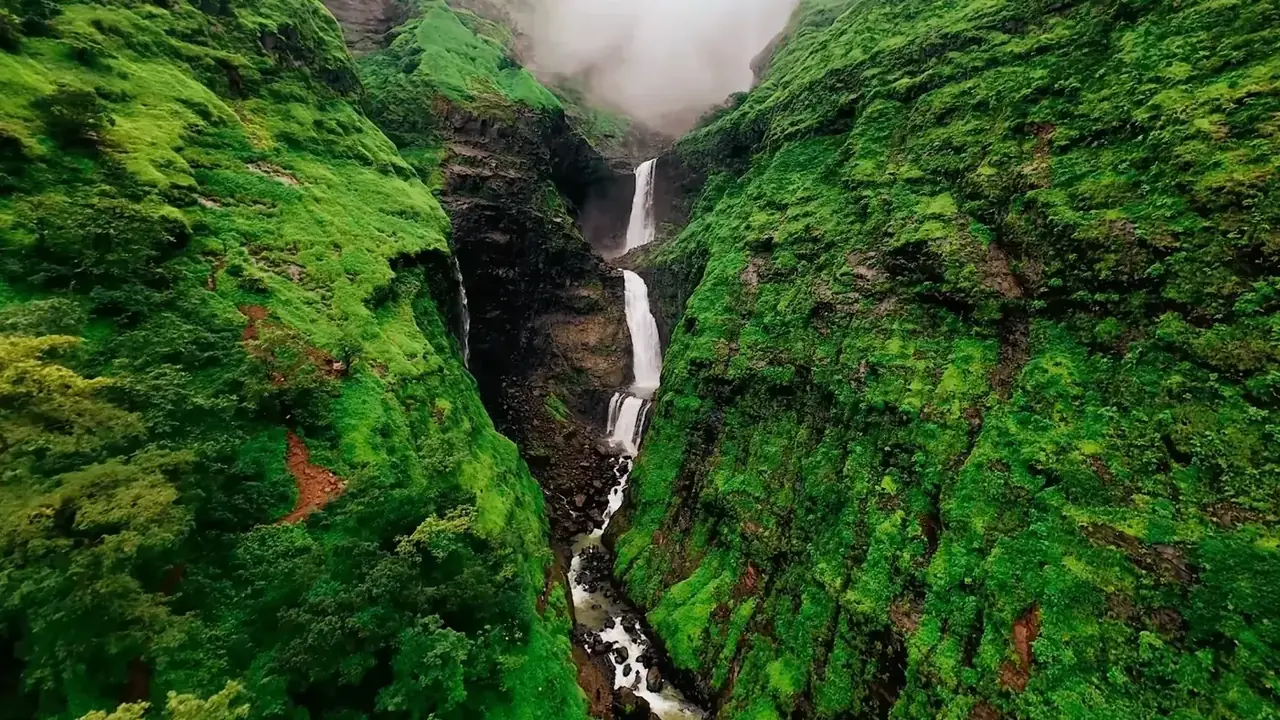
Tucked away in the Malshej Ghat region, in a stretch locals call God Valley, Kalu Waterfall plunges down the Sahyadri cliffs in multiple tiers during the monsoon. It's a short trip from both Mumbai and Pune, which is exactly why it gets crowded, and exactly why a few basic rules matter more here than on most Sahyadri treks.
Table of Contents
- Where Kalu Waterfall Is Located
- What Makes Kalu Waterfall Different
- Latest Safety Updates You Need to Know (2023-2026)
- Trek Route and What to Expect
- How to Reach Kalu Waterfall
- Best Time to Visit
- Difficulty Level
- Rules and Safety Guidelines You Must Follow
- What to Pack
- Nearby Attractions
- Frequently Asked Questions
Where Kalu Waterfall Is Located
Kalu Waterfall sits in the Malshej Ghat region, close to the border of Thane and Pune districts, near the villages of Khireshwar, Sawarne, and Thitbi. The waterfall originates in the hills near Harishchandragad and flows down through the Khireshwar area, descending from the Deccan plateau toward the Konkan side of the Sahyadris.
It's roughly 140 kilometers from Mumbai and 130 kilometers from Pune, making it a realistic one-day or overnight trip during monsoon weekends.
Sources describe the waterfall's height differently, with some citing around 400 feet and others describing it as considerably taller, cascading across four to five distinct tiers. What's consistent across every source is that it's counted among the tallest and most powerful seasonal waterfalls in the Malshej region.
What Makes Kalu Waterfall Different
Unlike a fort trek or a ridge walk, Kalu Waterfall is a monsoon-only destination. Outside the rainy season, the waterfall largely dries up and there's little reason to make the trip. This also means the entire experience, the trail conditions, the water crossings, the views, changes dramatically depending on how much rain has fallen that week. For broader guidance beyond this specific trek, our monsoon trekking safety guide covers the general precautions every Sahyadri trekker should know.
The trail passes through dense forest that's part of one of the richer biodiversity pockets in the Western Ghats, with sightings of Malabar giant squirrels, kingfishers, and various endemic birds reported along the route, alongside seasonal wildflowers including the karvi, which is known to bloom once every several years.
Latest Safety Updates You Need to Know (2023-2026)
This is the part most travel blogs skip, and it's the part you actually need to read before booking.
Kalu Waterfall has a documented history of serious, sometimes fatal, monsoon accidents. Here's what's been reported:
- August 2023: A 29-year-old tourist from Hyderabad drowned after falling roughly 60-70 feet into the Kalu waterfall while visiting with a group of four. His body took several days to recover due to the terrain and weather conditions.
- July 2025: A video that went viral showed an intoxicated visitor stuck dangerously close to the edge of the waterfall in strong monsoon current, before being rescued by alert locals and a rescue team.
- July 2025: Roughly 40 to 50 tourists had to be rescued after a sudden surge in the Kalu river's water level, caused by heavy rainfall upstream, left them stranded with no safe way back. This happened despite prior warnings from the India Meteorological Department and the Forest Department.
What changed because of this: several established trekking operators have since restructured their itineraries. Instead of taking groups directly to the base of the waterfall, many now stop at a designated viewpoint roughly 1 to 1.5 km away, with direct base access treated as conditional on river levels and weather. Where a river crossing is genuinely necessary, some operators use a steel zipline or rope crossing, run by trained local guides, and call it off entirely on days when conditions are unsafe.
What this means for you: - Never attempt this trek independently during heavy or continuous rainfall - Never cross the Kalu river or approach the waterfall edge without a local guide's explicit go-ahead - If you're booking a guided trek, ask directly whether they take groups to the waterfall base or only to a safe viewpoint, and don't assume - Water levels can rise with almost no warning due to rainfall happening upstream, even if it's not raining where you're standing
Trek Route and What to Expect
There are two commonly used approaches to Kalu Waterfall:
Via Sawarne (Thitbi Route) Most current guided treks start from Sawarne village (near the MTDC point on Malshej Ghat road), trek through Thitbi, and head into the forest toward the valley. This route generally takes about 2 to 3 hours one way and passes through several stream crossings in the first hour alone.
Via Khireshwar (Khubi Phata Route) An alternative approach starts near Khubi Phata and heads toward Khireshwar village before continuing to the waterfall area. This route is also used by some operators and overlaps partly with routes leading toward Harishchandragad.
Along either route, expect forest trails, wet rocks, muddy patches, gradual ascents and descents, and multiple stream crossings, conditions that shift significantly depending on recent rainfall.
How to Reach Kalu Waterfall
From Mumbai Route: Mumbai - Thane - Kalyan - Murbad - Tokawade - Khubi Phata/Sawarne Distance: approximately 140 km
From Pune Route: Pune - Chakan - Rajgurunagar - Manchar - Narayangaon - Alephata - Khubi Phata/Sawarne Distance: approximately 130 km
By Train The nearest major railway station is Kalyan Junction. From Kalyan, board a bus heading toward Nagar or Nashik and get down at either Khubi Phata (walk toward Khireshwar) or Sawarne, the MTDC point on Malshej Ghat road (walk toward Thitbi).
Best Time to Visit
Kalu Waterfall is strictly a monsoon and post-monsoon destination, with most sources agreeing on July to October as the window when it's worth visiting, and July to September specifically as the period of heaviest, most dramatic flow. Some operators note the waterfall becomes active from around the second week of July, depending on that year's rainfall pattern.
Outside this window, particularly in the dry season and summer, access is limited and the waterfall itself largely disappears, so there's little point making the trip.
Difficulty Level
Kalu Waterfall trek is generally rated easy to moderate, though this varies by operator and by how much it has rained recently. Consider it moderate to be safe:
- The trail itself is manageable for reasonably fit beginners under normal conditions
- Monsoon conditions, wet rocks, mud, and stream crossings, add real physical and technical demand even on an otherwise simple trail
- River crossings, when required, need proper supervision and are not something to attempt solo
- This is not a trek for young children, elderly visitors, or anyone uncomfortable around fast-moving water
Rules and Safety Guidelines You Must Follow
Given the trek's accident history, these aren't optional suggestions, they're the difference between a memorable weekend and a genuine emergency. Our guide to staying safe near waterfalls and cliffs covers more general precautions worth knowing.
- Never cross the Kalu river without a trained local guide's supervision. Water levels can rise suddenly due to rain falling far upstream.
- Do not approach the waterfall edge for photos. Multiple documented incidents involve people getting too close to the edge or current.
- Never consume alcohol before or during the trek. At least one serious near-miss incident directly involved intoxication.
- Follow your trek leader's instructions immediately and without argument, especially regarding river crossings and turnaround decisions.
- Check weather and Forest Department advisories before you go, and be willing to cancel or reschedule if heavy rain is forecast.
- Do not litter. Multiple local guides and operators specifically ask visitors to carry back any waste they generate, since this remains a relatively untouched forest ecosystem.
- Stay with your group. Mobile network coverage is unreliable through large sections of the route, making it hard to get help quickly if you get separated.
- Wear proper trekking shoes with strong grip. Avoid sneakers, sandals, or anything that loses traction on wet rock.
What to Pack
- Trekking shoes with excellent grip (not sneakers or sandals)
- A raincoat or poncho, plus a dry bag for phones and electronics
- Quick-dry clothing; avoid cotton and denim, which stay wet and heavy
- A small backpack (around 20 liters is generally sufficient)
- Basic first-aid supplies and any personal medication
- A power bank, since charging options won't be available on the trail
- Cash, since digital payment options are limited in the base villages
Nearby Attractions
Since you're already in the Malshej Ghat region, these are worth combining with your trip:
- Old Malshej Ghat / Ganesh Ghat: A scenic old trade route through the ghat
- Aadrai Jungle Trek: Passes through the same forest that feeds Kalu Waterfall, reaching its upper basin
- Nageshwar Temple: A local temple worth a short visit
- Pimpalgaon Joga Dam: The upstream water source that feeds the Kalu river
- Harishchandragad Fort and Kokan Kada: Visible from certain viewpoints along the Kalu Waterfall trail
Frequently Asked Questions
1. Is the Kalu Waterfall trek safe? It can be, with proper precautions, but it has a documented history of serious accidents, including a fatality in 2023 and a mass rescue of 40-50 tourists in 2025 due to sudden flash flooding. Never attempt river crossings without a trained guide, and never go during heavy rainfall warnings.
2. What is the best time to visit Kalu Waterfall? July to October, with July to September generally offering the strongest, most dramatic flow. The waterfall is largely inactive outside monsoon and post-monsoon months.
3. How do I reach Kalu Waterfall from Mumbai? By road via Thane, Kalyan, Murbad, and Tokawade to Khubi Phata or Sawarne, roughly 140 km. By train, the nearest station is Kalyan Junction, followed by a bus to the base village.
4. Do guided treks take you directly to the waterfall base? Not always, and this has changed recently. Several operators now stop at a safe viewpoint roughly 1 to 1.5 km from the waterfall rather than the base itself, especially when river conditions are unpredictable. Always confirm this with your operator before booking.
5. What is the difficulty level of this trek? It's generally rated easy to moderate, but monsoon conditions, wet rocks, mud, and river crossings, add real difficulty even for an otherwise manageable trail.
6. Is there a river crossing on this trek? Yes, depending on the route and water levels. Some operators use a steel zipline or rope-assisted crossing managed by trained local guides, and this is called off entirely when conditions are unsafe.
7. Do I need a forest department permit for this trek? Entry permissions and forest fees are generally required and are typically arranged by guided trek operators as part of their package. If trekking independently, check current requirements with the local forest office beforehand.
8. Can beginners do this trek? Reasonably fit beginners can usually manage the trail itself, but the water crossings and monsoon conditions mean this isn't ideal for absolute first-timers trekking without an experienced guide.
Kalu Waterfall is genuinely one of the most spectacular monsoon sights near Mumbai and Pune, and that's exactly why it draws crowds every weekend from July through October. But the same rain that makes it beautiful also makes the Kalu river genuinely unpredictable, and the last few monsoon seasons have shown that clearly.
Go with a guide who takes safety seriously, respect river crossing decisions even when they're inconvenient, skip the alcohol, and this can be one of the most memorable monsoon treks in the Sahyadris. Ignore those basics, and the same trail has already put people in real danger.
Ready for Your Next Adventure?
Don't just read about it — come experience it. Browse our upcoming treks and book your spot with certified trek leaders, small groups, and everything organised for you.
🏷 Kalu Waterfall trek, Kalu Waterfall Malshej Ghat, God Valley trek Maharashtra, Kalu Waterfall Thane district
Be the first to comment on this post.