Introduction
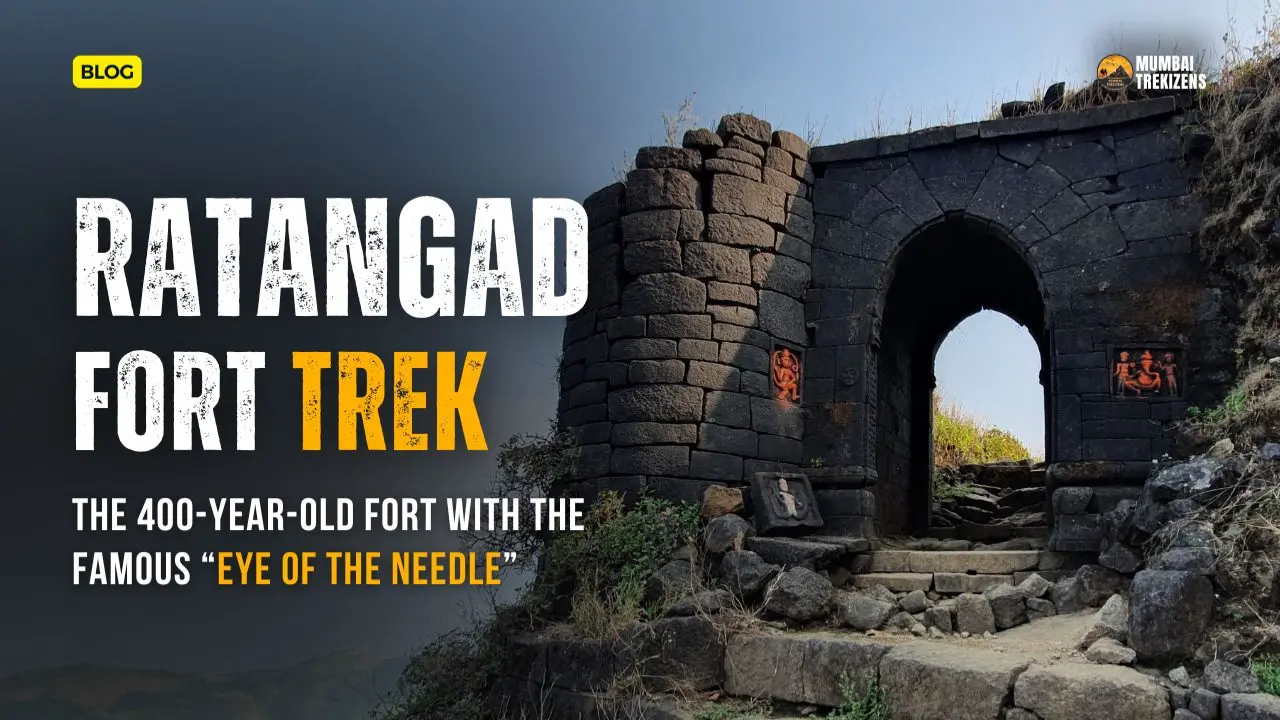
Some forts win you over with one unforgettable feature. For the Ratangad trek, it's the Nedhe, a natural hole punched clean through the rock near the summit, framing the Sahyadri sky like a giant stone window. Trekkers travel from across Maharashtra just to stand in that "Eye of the Needle" and take in the view.
Ratangad is a roughly 400-year-old fort in the Bhandardara region of Ahmednagar district, sitting at around 4,255 feet. It offers a beautiful mix of forest trail, iron ladders, ancient caves, and one of the finest ridge panoramas in the range, with Kalsubai, Alang, Madan, Kulang, and the Bhandardara backwaters all in view.
This guide covers the route from Ratanwadi, the fort's history, difficulty, best season, transport, food, stay, water, expenses, and the safety tips that make the climb smooth and enjoyable.
Table of Contents
- Where Ratangad Is Located
- A Short History of Ratangad Fort
- The Nedhe and What's on the Fort
- The Trek Route From Ratanwadi
- Difficulty Level and Who It Suits
- How to Reach Ratangad
- Best Time to Visit
- Water Sources, Food, and Stay
- Estimated Expenses
- Safety Tips
- Practical Tips
- Common Mistakes
- Expert Insights
- Frequently Asked Questions
- Ready for Your Next Adventure?
Where Ratangad Is Located
Ratangad Fort stands in the Bhandardara region of Ahmednagar district, Maharashtra, deep in the Sahyadri range. The fort sits at roughly 4,255 feet (about 1,297 meters) above sea level.
The main base village is Ratanwadi, a small settlement near the Bhandardara backwaters, roughly 190 to 197 km from Mumbai and reachable in about 6 to 7 hours by road. The village itself sits around 2,400 feet, so the trek gains close to 1,475 feet to the summit.
Ratanwadi is also home to the beautiful Amruteshwar Temple, an ancient stone temple in the Hemadpanti style, which many trekkers visit before or after the climb.
A Short History of Ratangad Fort
Ratangad is believed to be around 400 years old, and it holds a place in Maratha history as one of the forts associated with Chhatrapati Shivaji Maharaj's kingdom. Its position gave it a commanding view over the surrounding valleys and trade routes, which made it strategically valuable in its time.
The fort's name and setting have earned it the nickname "the jewel of the Bhandardara region." Old rock-cut caves, water cisterns, and gateways still stand as reminders of the centuries it has watched over these hills.
Because the fort sits among the giants of the range, including Kalsubai, Maharashtra's highest peak, it has long been a favorite for trekkers who love big Sahyadri views with a strong sense of history.
The Nedhe and What's on the Fort
The star attraction is the Nedhe, also called the Eye of the Needle, a large natural hole through the rock near the top of the fort. It's a striking natural formation and easily the most photographed spot on the trek. The route actually takes you around and down the other side of the Nedhe as part of reaching the fort.
Other features you'll find on Ratangad:
- Rock-cut caves near the summit, some used by trekkers for overnight stays
- Ancient water cisterns, several holding water considered drinkable
- Old gateways and fortifications from the fort's active days
- A small temple on the fort
- Panoramic views of Kalsubai, Alang-Madan-Kulang, Ajoba, and the Bhandardara backwaters
On a clear post-monsoon day, the view from the top is one of the most rewarding in the northern Sahyadri.
The Trek Route From Ratanwadi
The most popular route starts from Ratanwadi village and runs about 6 km one way to the fort.
What the trail is like:
- The start: The trail leaves Ratanwadi and climbs steadily, mostly uphill with some rolling ups and downs.
- Forest section: A pleasant stretch through forest, shaded and scenic, especially green in and just after monsoon.
- Iron ladders: Near the upper section, a few sturdy iron ladders help you up the steeper rock, a fun and safe part of the climb.
- The Nedhe and gateways: You reach the area around the Nedhe and pass through old gateways to gain the fort.
Timing: Expect roughly 3 hours to ascend and about 2 hours to descend at a comfortable pace, not counting rest and photo stops.
An alternative, longer approach exists from Samrad village on the other side, sometimes combined with the Sandhan Valley region, but Ratanwadi is the standard and most convenient base for a Ratangad trek. The trail junctions can confuse first-timers, so review our navigation tips for Sahyadri fort treks.
Difficulty Level and Who It Suits
The Ratangad trek is rated moderate. It's a continuous uphill climb with a forest trail and a few iron ladders, but nothing technical for a reasonably fit person.
- Suitable for: trekkers with basic fitness, including motivated beginners who don't mind a steady climb and short ladder sections.
- Needs care: the ladder sections and the descent around the Nedhe call for steady footing and a calm head.
- Great as: a first "real Sahyadri fort" experience, or a weekend trek with genuine views and history.
Beginners do this trek regularly, especially with a group. The combination of a clear route, ladders for the steep bits, and moderate distance makes it approachable while still feeling like an adventure.
How to Reach Ratangad
From Mumbai
- By road, drive toward Kasara, then Igatpuri, and on toward Bhandardara and Ratanwadi (roughly 190 to 197 km, about 6 to 7 hours depending on the final village road).
- By train, take a train to Kasara or Igatpuri, then hire a jeep or cab onward to Ratanwadi via Bhandardara.
From Pune
- By road, drive via Sangamner and Akole toward Bhandardara and Ratanwadi (roughly 170 to 185 km, about 5 to 6 hours).
Nearest Railheads
- Igatpuri and Kasara are the most convenient railway stations for onward road travel to the base.
Note on the last stretch: The road to Ratanwadi is narrow and winding, and the village is remote. Local jeeps are the usual way to cover the final leg, and it's wise to arrange return transport in advance, since options thin out later in the day.
Best Time to Visit
- Post-monsoon and winter (October to February): The best window. Cool, pleasant weather, greenery still lingering, clear skies for those big ridge views, and drier, safer ladders and rock.
- Monsoon (June to September): The region turns spectacularly green with streams and mist, and the atmosphere is magical. The trail and ladders get slippery, though, so go with grippy footwear, extra care, and ideally an experienced group.
- Summer (March to May): Doable but hot and dry, with water sources less reliable. Start very early and carry plenty of water.
For first-timers, aim for the October to February sweet spot, when Ratangad is at its most welcoming. Some do this as a dawn summit — if so, read up on night trek safety in the Sahyadri first.
Water Sources, Food, and Stay
Water: The fort has rock-cut cisterns near the summit, and at least some hold water generally considered drinkable. Reliability varies by season, so carry enough water for the climb and treat cistern water as a backup rather than a guarantee.
Food: Ratanwadi has small local eateries and homestays that serve simple, hearty Maharashtrian meals like bhakri, pithla, rice, and tea. Carry your own snacks for the trail itself, as there are no reliable stalls on the way up.
Stay options:
- Homestays in Ratanwadi, the most comfortable choice, with home-cooked food.
- Camping near Bhandardara, popular for those combining the trek with lakeside camping.
- The rock-cut caves on the fort, used by experienced trekkers for an adventurous overnight stay (basic, so come fully prepared).
The Bhandardara area is a lovely place to spend a night either side of the trek, which is why many groups turn a Ratangad climb into a relaxed weekend.
Estimated Expenses
Costs vary with how you travel and stay, but as a rough guide for a self-planned trip:
| Item | Approx Cost (per person) |
|---|---|
| Transport (shared, from Mumbai/Pune) | ₹600 to ₹1,200 |
| Local jeep (last leg) | ₹100 to ₹300 |
| Homestay food and stay | ₹500 to ₹1,000 |
| Snacks, water, extras | ₹200 to ₹400 |
A guided, all-inclusive group trek is often similarly priced once transport, food, and coordination are added up, with the bonus of logistics, safety, and local know-how handled for you. Always verify current rates, as prices change.
Safety Tips
- Wear trekking shoes with strong grip, essential on the ladders and monsoon rock.
- Take the iron ladders one person at a time and keep three points of contact.
- Mind your footing around the Nedhe, where the descent is steep.
- Carry 2 to 3 liters of water and refill only from cisterns you trust.
- Start early to finish the descent in good light; the base is remote.
- Keep the group together, especially in the forest and in monsoon mist.
- Check the weather before you go, and reschedule under heavy-rain alerts.
- Save emergency and homestay contacts, since mobile signal is patchy in the region.
For monsoon treks or a first attempt, going with an experienced organizer adds a real safety margin here, given the remoteness and the ladder sections.
Practical Tips
- Visit the Amruteshwar Temple in Ratanwadi; it's a beautiful, ancient stone temple right at the base.
- Combine with Bhandardara for lakeside camping and a fuller weekend.
- Carry cash, as ATMs and digital payments are unreliable in the village.
- Pack a headlamp if you plan a sunrise start or a cave stay.
- Quick-dry clothing beats cotton, especially in monsoon.
- Confirm your return jeep before you start the climb.
- Carry out all your trash; there are no bins on the fort.
Common Mistakes
- Underestimating the remoteness and not arranging transport in advance.
- Relying on cistern water without carrying enough of your own.
- Attempting the ladders in worn-out shoes, risking slips.
- Starting late and descending the forest trail in poor light.
- Skipping the weather check before a monsoon attempt.
- Rushing the Nedhe descent instead of taking it carefully.
- Leaving litter in a pristine, remote area.
Expert Insights
Trek leaders who run Ratangad regularly love it for a simple reason: it delivers a big-mountain Sahyadri experience without demanding technical skill. The forest, the ladders, the Nedhe, and the summit panorama pack a lot of variety into a moderate climb, which makes it a favorite for building beginner confidence.
They also stress the remoteness factor. Ratanwadi is beautiful precisely because it's far from the city, but that means patchy signal, limited transport, and few facilities. Experienced groups plan around this with pre-arranged jeeps, local homestay contacts, and a clear timeline, which is why an organized Ratangad trek tends to run so smoothly.
Their final tip: give the fort time. Ratangad rewards those who linger at the Nedhe, explore the caves, and soak in the ridge views rather than rushing up and down. Plan a relaxed pace, ideally with a Bhandardara overnight, and it becomes one of the most memorable weekends in the northern Sahyadri.
Frequently Asked Questions
1. How difficult is the Ratangad trek? It's rated moderate: a steady uphill forest trail with a few sturdy iron ladders near the top. Reasonably fit beginners manage it well, especially with a group, though the ladders and Nedhe descent need care.
2. What is the Nedhe at Ratangad? The Nedhe, or "Eye of the Needle," is a large natural hole through the rock near the summit. It's the fort's most famous feature and its most photographed spot, and the trek route passes around it.
3. Which is the base village for the Ratangad trek? Ratanwadi, near the Bhandardara backwaters, is the main base village. The trail from Ratanwadi to the fort is about 6 km one way, taking roughly 3 hours up and 2 hours down.
4. What is the best time to do the Ratangad trek? October to February offers the best weather, clear views, and safer, drier ladders. Monsoon is lush and beautiful but slippery, and summer is hot with less reliable water.
5. How do I reach Ratangad from Mumbai or Pune? From Mumbai, travel via Kasara or Igatpuri toward Bhandardara and Ratanwadi (about 6 to 7 hours). From Pune, go via Sangamner and Akole (about 5 to 6 hours). A local jeep covers the last stretch.
6. Is there water on Ratangad fort? Yes, there are rock-cut cisterns near the summit, some holding water generally considered drinkable. Reliability varies by season, so carry 2 to 3 liters and treat cistern water as a backup.
7. Can beginners do the Ratangad trek? Yes. Motivated beginners with basic fitness do Ratangad regularly. The clear route and ladders make it approachable, and going with an experienced group adds comfort and safety.
The Ratangad trek is a gem of the Bhandardara region: a moderate, richly varied climb through forest and iron ladders to a 400-year-old fort crowned by the unforgettable Nedhe. Add the ancient caves, the drinkable cisterns, and the sweeping views of Kalsubai and the Alang-Madan-Kulang range, and you have one of the northern Sahyadri's most rewarding weekend treks.
Go in the cool October to February window, respect the ladders and the weather, keep the remote setting in mind, and Ratangad will give you a climb, a view, and a stone window to the sky that stay with you long after you're home.
Ready for Your Next Adventure?
Don't just read about it — come experience it. Book your spot on the Ratangad Fort Trek with certified trek leaders, small groups, and everything organised for you.
🏷 Ratangad fort trek, Ratanwadi base village, Ratangad Nedhe eye of the needle, Bhandardara trek, Ratangad trek difficulty, Ratangad trek route from Ratanwadi
Be the first to comment on this post.