Introduction
The Visapur fort trek hides one of the Sahyadri's most photographed monsoon experiences: a rocky staircase with a waterfall cascading right down the steps. Climbing beside that rushing water, mist rising off the rocks, is the kind of moment that turns a rainy weekend into a lifelong memory.
Visapur is the larger, higher twin of the famous Lohagad fort, sitting just across from it near Lonavala. Standing at about 3,567 feet, it offers sweeping views, ancient structures, Buddhist caves nearby, and that unforgettable waterfall route in the rains.
This guide covers Visapur's routes, the waterfall staircase, difficulty, fort attractions, transport, food, and the monsoon safety tips that keep this thrilling wet-season climb both fun and secure.
Table of Contents
- Where Visapur Is Located
- A Short History of Visapur Fort
- The Famous Waterfall Staircase
- Fort Attractions at the Top
- Trek Routes to Visapur
- Difficulty Level and Who It Suits
- Visapur and Lohagad Together
- How to Reach Visapur
- Best Time to Visit
- Food, Water, and Facilities
- Monsoon Safety Tips
- Practical Tips
- Common Mistakes
- Expert Insights
- Frequently Asked Questions
- Ready for Your Next Adventure?
Where Visapur Is Located
Visapur Fort stands near Lonavala in Pune district, Maharashtra, right beside its more famous twin, Lohagad. Both share the base area around Malavli railway station and the Bhaja village region.
At around 3,567 feet, Visapur is actually higher and larger than Lohagad, though it's less crowded and a touch more adventurous to climb. Its plateau offers commanding views, including a fine look across to Lohagad itself.
Visapur's position on the Mumbai-Pune corridor makes it easily reachable, and its pairing with Lohagad and the Bhaja Caves makes for a rich trekking area.
A Short History of Visapur Fort
Visapur is part of the historic Lohagad-Visapur fort pair that guarded this stretch of the Sahyadri. It was built later than Lohagad and, being higher, was strategically significant, at times able to dominate its neighbor.
The fort saw action during the Maratha and British periods. The British captured it in the early 19th century, and being on higher ground, they used it to bring the neighboring Lohagad under control. Some of the fort's structures show damage from that era.
Today, Visapur's ruins, water cisterns, old fortifications, and the remains of structures dedicated to Hanuman give it a quieter, more atmospheric feel than the busier Lohagad, appealing to those who like a fort with a sense of solitude and history.
The Famous Waterfall Staircase
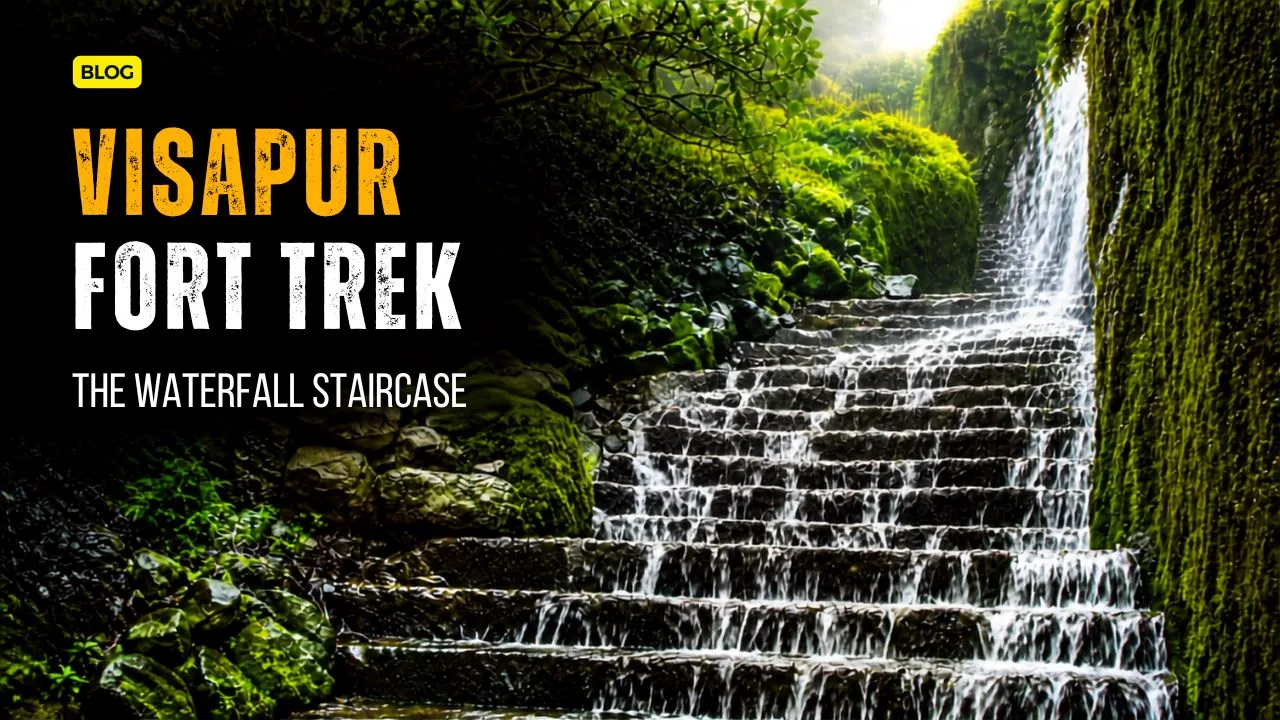
Visapur's star attraction in monsoon is its waterfall route, where a natural stream cascades down a rocky staircase you climb to reach the fort. Walking up alongside (and sometimes through) the flowing water is a genuinely thrilling, iconic Sahyadri monsoon experience.
What to know about the waterfall stairs:
- The water flows strongest in peak monsoon (July to August), turning the trail into a living waterfall.
- The rocks are very slippery here, so grip and care are essential.
- It's one of the most photographed monsoon trekking spots near Lonavala.
- The staircase section is exhilarating but demands steady, careful footing.
This is the reason many trekkers specifically choose Visapur over Lohagad in the rains. The waterfall staircase is pure monsoon magic, best enjoyed with good shoes, a calm pace, and respect for the slick rock.
Fort Attractions at the Top
Once you reach the plateau, Visapur rewards you with several things to explore:
- Expansive fort plateau with room to wander and take in the scale.
- Ancient water cisterns carved into the rock.
- Old fortification walls and ruins from the fort's active days.
- A large carving and structures associated with Hanuman.
- Panoramic views across the Sahyadri, including a striking view of Lohagad and its Vinchu Kata.
- The old Maha Darwaja area, marked by a broken stone staircase that signals you're near the top.
Because Visapur is larger and less crowded than Lohagad, it offers a more peaceful summit experience, ideal for soaking in the views and the history without the weekend bustle.
Trek Routes to Visapur
There are a few ways up Visapur, each with a different character.
Waterfall Route (via Gaimukh Khind)
- The most popular in monsoon, starting near Lohagadwadi.
- A monsoon waterfall flows down this trail, and it takes roughly an hour to the fort.
- Thrilling and scenic, but slippery.
Bhaja Caves Route
- Combines the ancient Bhaja Caves with the climb to the fort.
- A rewarding blend of history and trekking.
Patan Village Route
- The least used and hardest to follow.
- Best avoided without a local guide, as the trail is faint and easy to lose.
| Route | Character | Best For |
|---|---|---|
| Waterfall (Gaimukh Khind) | Popular, scenic, slippery | Monsoon adventure |
| Bhaja Caves | History plus climb | Heritage lovers |
| Patan village | Faint, hard to trace | Only with a guide |
For most trekkers, the waterfall route in monsoon or the Bhaja Caves route in other seasons is the way to go. The Patan route is genuinely tricky to navigate, which is exactly why local guidance matters there.
Difficulty Level and Who It Suits
Visapur is rated easy to moderate, taking roughly 2 to 3 hours to climb. It's a bit more demanding than Lohagad, mainly because of the slippery waterfall section and the larger scale.
- Suitable for: trekkers with reasonable fitness, including motivated beginners (especially outside peak-slippery conditions).
- Needs care: the waterfall staircase in monsoon, which is genuinely slick, and the faint Patan route.
- Great for: monsoon adventure seekers, those wanting a quieter alternative to Lohagad, and heritage lovers.
The climb itself isn't technical, but the wet-season waterfall route raises the care factor. Good footwear and a steady approach make it very manageable and hugely enjoyable.
Visapur and Lohagad Together
Because Visapur and Lohagad share the Malavli base and the Bhaja Caves area, energetic trekkers often combine both forts in one day.
If you plan to do both:
- Start early; two forts plus caves is a full, tiring day.
- Lohagad is easier and quicker; Visapur is larger and a bit tougher.
- Manage your energy and water for the longer outing.
- Watch the time so you finish the second fort with daylight to spare.
Doing both is rewarding but demanding, especially in monsoon. Many prefer to enjoy one fort properly rather than rush both. If you do attempt the pair, going with a group that manages the timing and pace helps you enjoy it without exhaustion. Most trekkers pair it with the neighbouring Lohagad Fort trek in a single day.
How to Reach Visapur
By Train (most popular)
- Take a train to Malavli station on the Mumbai-Pune line. From Malavli, cross the flyover over the expressway and follow the route toward Bhaja and Lohagadwadi, then to the Visapur trail.
From Mumbai
- By road via the Mumbai-Pune Expressway toward Lonavala, then Malavli/Bhaja (roughly 2.5 to 3 hours).
From Pune
- By road toward Lonavala and Malavli (roughly 1.5 to 2 hours).
Base Area
- Malavli and the Bhaja/Lohagadwadi area serve as the base for the popular routes.
Note: As with Lohagad, Malavli is a local-train stop, so check timings. For the waterfall route, follow the trail near Lohagadwadi; for the tricky Patan route, a local guide is strongly advised.
Best Time to Visit
- Monsoon (June to September): The best and most famous time, when the waterfall staircase comes alive. Lush, misty, and thrilling, but slippery, so grip and care are vital. Peak flow is around July to August.
- Post-monsoon and winter (October to February): Pleasant, clear weather with lingering greenery, comfortable and safer underfoot for those who prefer dry trails.
- Summer (March to May): Hot and dry, with no waterfall; start early and carry water if you go.
Monsoon is the signature Visapur experience, thanks to the waterfall, while winter offers comfort and safer footing. Choose based on whether you want the waterfall thrill or the easy dry climb.
Food, Water, and Facilities
Food and water: The Malavli-Bhaja-Lohagadwadi area has stalls and small eateries, especially in monsoon and on weekends, selling snacks, poha, bhajji, corn, lemon water, and tea. Carry your own water (2 liters) and some snacks, as stalls thin out on the fort itself.
Facilities: The base area is reasonably served given its popularity, but Visapur's top is quieter and less commercial than Lohagad's. Come prepared, carry out all trash, and don't count on facilities at the summit.
The hot bhajji and tea culture along the monsoon trail is part of the fun here too, best enjoyed after the climb rather than before it.
Monsoon Safety Tips
Since monsoon is the prime season and the waterfall route is slippery, these tips matter most:
- Wear trekking shoes with excellent grip; the waterfall rocks are very slick.
- Take the waterfall staircase slowly, testing each step, and use handholds.
- Don't stand directly in strong-flowing water on the steepest sections.
- Keep your phone in a waterproof pouch.
- Mind the exposed edges in mist and reduced visibility.
- Avoid the fort tops in thunderstorms.
- Skip the faint Patan route without a guide.
- Start early to avoid weekend crowds and afternoon downpours.
The waterfall staircase is the highlight and the main hazard rolled into one. Good shoes and a careful pace handle it, and in busy monsoon conditions, a guided group brings welcome order and safety on the slick sections. The waterfall staircase gets slippery, so beginners should review our Sahyadri trekking safety checklist.
Practical Tips
- Choose the waterfall route in monsoon for the iconic experience.
- Pair with the Bhaja Caves for history along the way.
- Combine with Lohagad only if you're fit and start early.
- Go on a weekday in monsoon to dodge the biggest crowds.
- Carry cash for stalls and the base village.
- Grippy shoes are non-negotiable on the wet staircase.
- Avoid the Patan route unless you have a local guide.
- Carry out all trash from this quieter, scenic fort.
Common Mistakes
- Underestimating the slippery waterfall staircase and rushing it.
- Wearing poor-grip shoes on the wet rock.
- Attempting the faint Patan route solo and getting lost.
- Trying to do both Visapur and Lohagad without enough time or fitness.
- Not carrying water, relying only on stalls.
- Standing in strong-flowing water on steep steps for photos.
- Venturing onto exposed tops in a thunderstorm.
- Leaving litter on a quieter fort with fewer cleanup resources.
Expert Insights
Trek leaders describe Visapur as the wilder, quieter cousin of Lohagad, and many prefer it for exactly that reason. It's larger, higher, less crowded, and in monsoon it delivers the unforgettable waterfall staircase that draws photographers and adventure lovers from across the region.
Their strongest caution is about that waterfall route. It's thrilling and completely doable with good footwear and a careful pace, but the flowing water over rock is genuinely slippery, and rushing it is the main cause of slips. Taking it slow, testing each step, and staying off the strongest flow keeps it safe and fun.
They also gently warn against overreaching by combining both forts in monsoon without preparation, and against the faint Patan route without local knowledge. For the best experience, they suggest enjoying Visapur's waterfall route with a group that knows the fort, manages the slick sections, and lets you focus on the sheer joy of climbing beside a monsoon waterfall.
Frequently Asked Questions
1. What is the waterfall staircase at Visapur? It's a rocky staircase on the popular monsoon route where a natural stream cascades down the steps you climb. Walking up beside the flowing water is an iconic Sahyadri monsoon experience, though the rocks are very slippery.
2. How difficult is the Visapur fort trek? It's rated easy to moderate, taking about 2 to 3 hours. It's slightly tougher than Lohagad, mainly due to the slippery monsoon waterfall route and the fort's larger scale, but it isn't technical.
3. How do I reach Visapur fort? Take a train to Malavli station on the Mumbai-Pune line, then follow the route via Bhaja and Lohagadwadi to the Visapur trail. By road, it's about 1.5 to 2 hours from Pune and 2.5 to 3 hours from Mumbai.
4. Which is better, Visapur or Lohagad? Lohagad is easier, quicker, and more crowded, ideal for beginners and families. Visapur is larger, higher, quieter, and more adventurous, with the famous monsoon waterfall staircase. Fit trekkers sometimes do both.
5. What is the best time to trek Visapur? Monsoon (June to September) is best for the waterfall staircase, with peak flow around July to August, though it's slippery. Post-monsoon and winter offer comfortable, safer, drier conditions.
6. Is the Patan village route to Visapur safe? The Patan route is the least used and hardest to trace, so it's easy to lose the trail. It's best avoided without a local guide. Stick to the waterfall or Bhaja Caves routes otherwise.
7. Can I visit Bhaja Caves with Visapur? Yes. The Bhaja Caves route combines the ancient 2nd-century-BCE Buddhist caves with the climb to the fort, making a rewarding blend of history and trekking along the way.
The Visapur fort trek is the Sahyadri at its monsoon best: a rushing waterfall staircase, misty ramparts, ancient cisterns, and sweeping views from a fort that's larger and quieter than its famous twin Lohagad. Whether you come for the iconic waterfall route in the rains or a peaceful dry-season climb, Visapur rewards you with adventure and solitude in equal measure.
Wear grippy shoes, take the waterfall steps slowly, pair it with the Bhaja Caves, and treat the slick rock with respect. Do that, and Visapur will hand you one of the most exhilarating monsoon trekking memories in Maharashtra.
Ready for Your Next Adventure?
Don't just read about it — come experience it. Book your spot on Sahyadri Treks with certified trek leaders, small groups, and everything organised for you.
🏷 Visapur waterfall staircase, Visapur fort Lonavala, Visapur trek route, Visapur and Lohagad trek, Visapur fort difficulty, Visapur fort trek waterfall route monsoon
Be the first to comment on this post.