Introduction
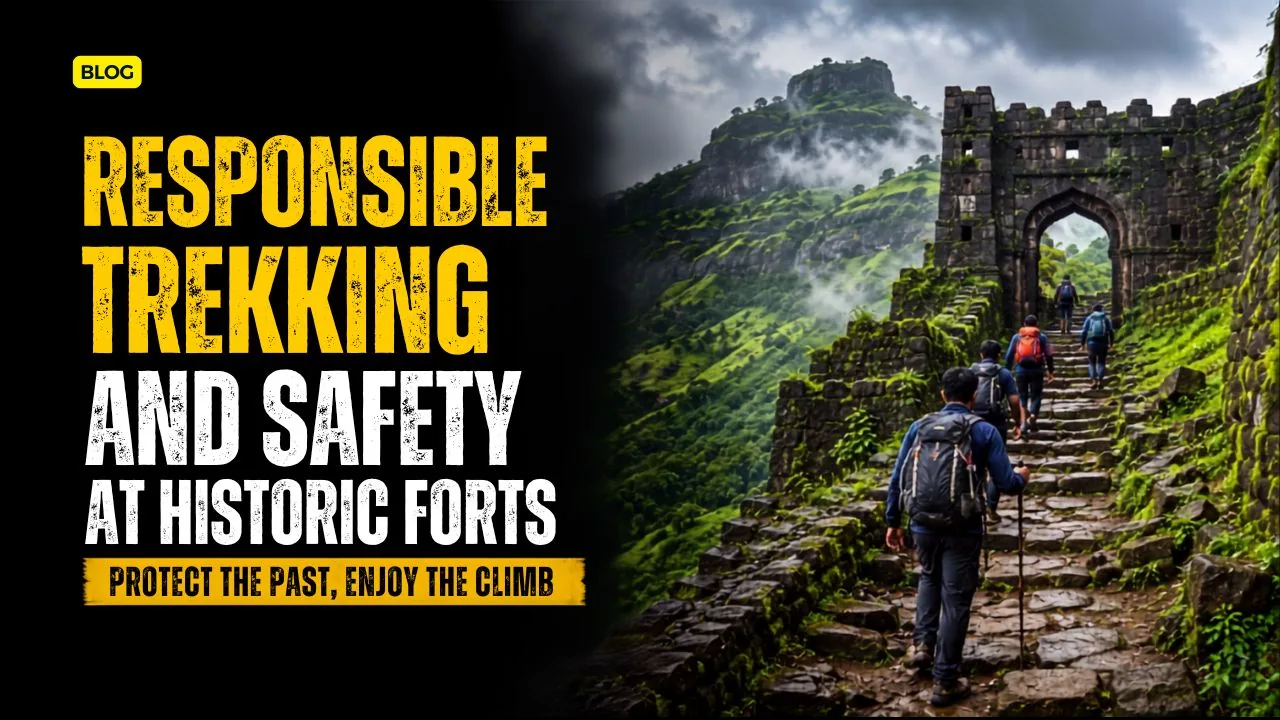
Climbing a Sahyadri fort is like walking straight into a story. These stone walls, gateways, and water tanks were built centuries ago, and standing on a bastion where history unfolded is one of trekking's great thrills. Responsible trekking and safety at historic forts is how we keep both ourselves and these treasures safe, so the story continues for the next generation.
Forts are different from ordinary trails. The steps are old and worn, some walls are fragile, and the very features that make them magical also ask for a bit of extra care. The good news is that trekking a fort well is simple once you know how.
This guide covers how to move safely around damaged steps and unstable structures, how to respect restricted and sacred spots, and how to leave a fort as beautiful as you found it. Trek responsibly and every fort visit becomes richer, safer, and more meaningful.
Table of Contents
- Why Historic Forts Need Special Care
- Navigating Damaged Steps and Steep Sections
- Unstable Walls and Structures
- Respecting Restricted and Sacred Areas
- Leave No Trace: Litter and the Environment
- Fire Safety at Forts and Campsites
- Protecting Heritage for the Future
- Practical Tips
- Common Mistakes
- Expert Insights
- Frequently Asked Questions
- Ready for Your Next Adventure?
Why Historic Forts Need Special Care
Sahyadri forts like Rajgad, Torna, Harishchandragad, and Lohagad have stood for hundreds of years. Time, weather, and monsoon after monsoon have worn their stone. That history is exactly what makes them special, and also what asks for care.
Two things are true at once on a fort trek:
- The structures are precious heritage that deserve respect and protection.
- Some sections are aged and uneven, so a little caution keeps you safe.
Treating forts with respect isn't a limit on the fun; it's part of it. When you move thoughtfully around a centuries-old gateway or water cistern, you get a deeper experience and you help ensure the fort survives for the trekkers who come after you. That shared responsibility is at the heart of good trekking culture.
Navigating Damaged Steps and Steep Sections
Old forts are full of stone steps, and many are worn smooth, uneven, or partly broken. They're perfectly manageable with the right approach.
How to handle old fort steps safely:
- Slow down and watch your footing, especially where steps are polished smooth by centuries of feet.
- Use handholds and railings where they exist, but test old railings gently before trusting your weight to them.
- Face the steps on steep descents, turning inward like a ladder on the hardest sections rather than walking down facing out.
- Take rock-cut steps one at a time when they're narrow, high, or wet.
- Give others space. Let a steady stream of trekkers pass rather than crowding a narrow staircase.
Wet weather changes everything here. Monsoon rain turns stone steps slick, so grip footwear and extra care matter most in the rains. On famously steep fort sections, going with people who know exactly where the tricky moves are makes the climb both safer and far more enjoyable.
Unstable Walls and Structures
Fort walls, bastions, and old buildings are beautiful, but some have weakened over the centuries. A simple rule keeps you and the structure safe: admire, don't lean or climb on fragile stonework.
Staying safe around old structures:
- Don't sit or stand on the edge of bastions and ramparts. Old walls can have loose stones and crumbling edges, and the drops are real.
- Avoid climbing on walls for photos. A dramatic shot isn't worth a slip or a dislodged stone.
- Keep clear of overhangs and undercut sections that may be structurally weak.
- Watch children closely around all fort edges and structures.
- Step carefully near old water tanks and cisterns, which can have slick, unguarded edges.
Many fort accidents trace back to climbing where you shouldn't for a better view or photo. Enjoy the fort from stable ground and you sidestep the risk entirely. The best views almost always come from safe vantage points anyway.
Respecting Restricted and Sacred Areas
Forts often contain temples, shrines, memorials, and areas marked off by the authorities. Respecting these is both good manners and, sometimes, good sense.
How to respect fort spaces:
- Follow any signs or barriers put up by the Archaeological Survey of India, the forest department, or local authorities. They usually mark either fragile heritage or genuine hazards.
- Treat temples and shrines with reverence: remove footwear where expected, keep noise down, and follow local customs.
- Don't enter closed or cordoned-off sections, even if a gap makes it possible.
- Respect local villagers and caretakers, who often maintain these forts and know them intimately.
Many forts hold deep cultural and religious meaning for local communities. Approaching them with respect enriches your visit and keeps you welcome. When in doubt about what's allowed, ask a local or your trek leader rather than assuming. Ancient sites like the Naneghat caves and inscriptions are especially fragile.
Leave No Trace: Litter and the Environment
Nothing spoils a magnificent fort like plastic wrappers wedged into ancient walls. Responsible trekkers follow one clear principle: carry back everything you carry in.
Leave No Trace on fort treks:
- Pack out all your trash, including small items like wrappers, bottle caps, and cigarette butts.
- Carry a small trash bag for your group's waste, and pick up a little extra if you can.
- Never leave food scraps behind. They pollute the site and draw monkeys and other wildlife into unhealthy habits.
- Don't scratch, carve, or paint names or marks on walls and rocks. This defaces irreplaceable heritage.
- Avoid picking plants or disturbing wildlife, especially in monsoon when the fort ecosystems are thriving.
- Use existing paths rather than cutting new ones that erode the hillside.
A fort left clean is a gift to everyone who follows. Some of the most inspiring trekking groups make a habit of descending with more trash than they created, and it's a habit worth adopting. Organized treks often build a cleanup ethic into every trip, which keeps popular forts beautiful.
Fire Safety at Forts and Campsites
Many forts allow camping, and a night under the stars on a fort is unforgettable. Fire, though, needs real care, both for safety and to protect the site.
Fire safety guidelines:
- Check whether fires are even allowed. Many forts and protected areas prohibit open fires, and forest-department rules apply. Respect them.
- Never light fires near dry grass or in windy conditions, especially in the dry pre-monsoon months when the hills are tinder-dry.
- Use a camp stove for cooking instead of open fires wherever possible.
- Keep fires small and contained if permitted, well away from structures and vegetation.
- Fully extinguish any fire with water before sleeping or leaving, and confirm it's cold to the touch.
- Don't burn trash, which releases toxins and can leave a mess or spread.
Dry-season grass fires can spread across a hillside frighteningly fast. The safest choice on most fort camps is a stove and no open flame at all. Guided camping trips typically handle cooking with proper stoves and clear fire rules, which removes the risk while keeping the experience magical.
Protecting Heritage for the Future
Every fort you climb is a piece of living history that belongs to everyone. Trekking responsibly is how that history survives.
Simple ways to protect fort heritage:
- Treat every wall, gate, and carving as irreplaceable, because it is.
- Discourage graffiti and vandalism when you see it, and never add to it.
- Share the "respect the fort" ethic with newer trekkers and your own group.
- Support conservation efforts and local caretakers where you can.
- Spread awareness by posting responsible-trekking practices rather than risky stunts.
The forts of the Sahyadri have survived centuries of weather and war. Whether they survive modern tourism is largely up to us. Trekking with care and teaching others to do the same is one of the most meaningful things a trekker can do. Grand forts like Rajgad have survived centuries — let's keep them that way.
Practical Tips
- Wear grippy footwear for worn, smooth fort steps, especially in monsoon.
- Face inward on steep descents and test old railings before trusting them.
- Keep well back from bastion and cistern edges, and don't climb walls for photos.
- Carry a trash bag and pack out everything, plus a little extra.
- Follow all signs and barriers from authorities and caretakers.
- Prefer a camp stove over open fire, and check fire rules first.
- Watch children closely around all edges and structures.
- Ask locals or your trek leader when unsure what's allowed at a particular fort.
Common Mistakes
- Climbing on walls and bastions for photos, a leading cause of fort accidents.
- Rushing down worn stone steps, especially when wet.
- Trusting old railings without testing them first.
- Leaving litter tucked into walls or scattered at viewpoints.
- Carving or painting names on historic stone.
- Lighting open fires in dry conditions or where they're banned.
- Ignoring cordons and signs put up for heritage protection or safety.
- Feeding monkeys or leaving food scraps, which harms wildlife and other trekkers.
Expert Insights
Guides who lead fort treks week after week see the same pattern: the accidents and the damage both come from the same place, treating a fort like a playground instead of a heritage site. Climbing where you shouldn't, rushing worn steps, and posing on crumbling edges are behind most avoidable fort mishaps.
Their approach flips that. They move through forts with respect and awareness, pointing out where a step is slick, where an edge is unguarded, and where a wall shouldn't be climbed. That running commentary keeps groups safe without dampening the wonder of the place.
They also model the conservation ethic loudly. Packing out trash, refusing to carve or climb on stonework, and honoring temple and restricted areas sets a tone that spreads through the group. When you trek forts with a team that genuinely cares for these places, you come away both safer and more connected to the history under your feet.
Frequently Asked Questions
1. How do I stay safe on old fort steps? Slow down, watch your footing on smooth worn stone, use handholds while testing old railings first, and face inward like a ladder on steep descents. Grippy footwear and extra care matter most in wet monsoon conditions.
2. Is it safe to climb on fort walls for photos? No. Old walls and bastions can have loose stones and crumbling edges above real drops. Admire and photograph from stable ground, since the best views usually come from safe vantage points anyway.
3. What does responsible trekking at forts mean? It means protecting both yourself and the heritage: moving carefully around old structures, respecting restricted and sacred areas, packing out all litter, avoiding graffiti, and following fire and conservation rules.
4. Can I light a campfire at a Sahyadri fort? Often not. Many forts and protected areas ban open fires, and dry-season grass fires spread fast. Check the rules first, prefer a camp stove, and fully extinguish any permitted fire before sleeping or leaving.
5. Why shouldn't I leave food scraps at a fort? Food scraps pollute the heritage site and train monkeys and other wildlife to rely on humans, which harms them and creates problems for future trekkers. Pack out all food waste along with your trash.
6. Are the restricted areas at forts really off-limits? Yes. Barriers and signs from the Archaeological Survey of India, forest department, or local authorities usually mark fragile heritage or genuine hazards. Respect them even if a gap makes entry possible.
7. How can I help protect historic forts? Trek with care, never carve or climb on stonework, pack out litter and a bit extra, respect sacred and restricted areas, and pass the responsible-trekking ethic on to newer trekkers and your own group.
Responsible trekking and safety at historic forts is really about respect: for the aged stone beneath your feet, for the drops beyond the walls, and for the trekkers and communities who share these places. Move carefully on worn steps, keep clear of fragile edges, honor restricted and sacred spots, pack out every scrap, and treat fire with real caution.
Do all that and a fort trek becomes what it's meant to be: a safe, thrilling walk through living history that you help preserve. The Sahyadri forts have waited centuries for you. Treat them well, and they'll reward every careful step.
Ready for Your Next Adventure?
Don't just read about it — come experience it. Book your spot on Sahyadri Treks with certified trek leaders, small groups, and everything organised for you.
🏷 fort trekking safety Sahyadri, responsible trekking practices, Leave No Trace trekking India, heritage fort trek etiquette, safe fort exploration tips, how to trek historic forts safely
Be the first to comment on this post.