Introduction
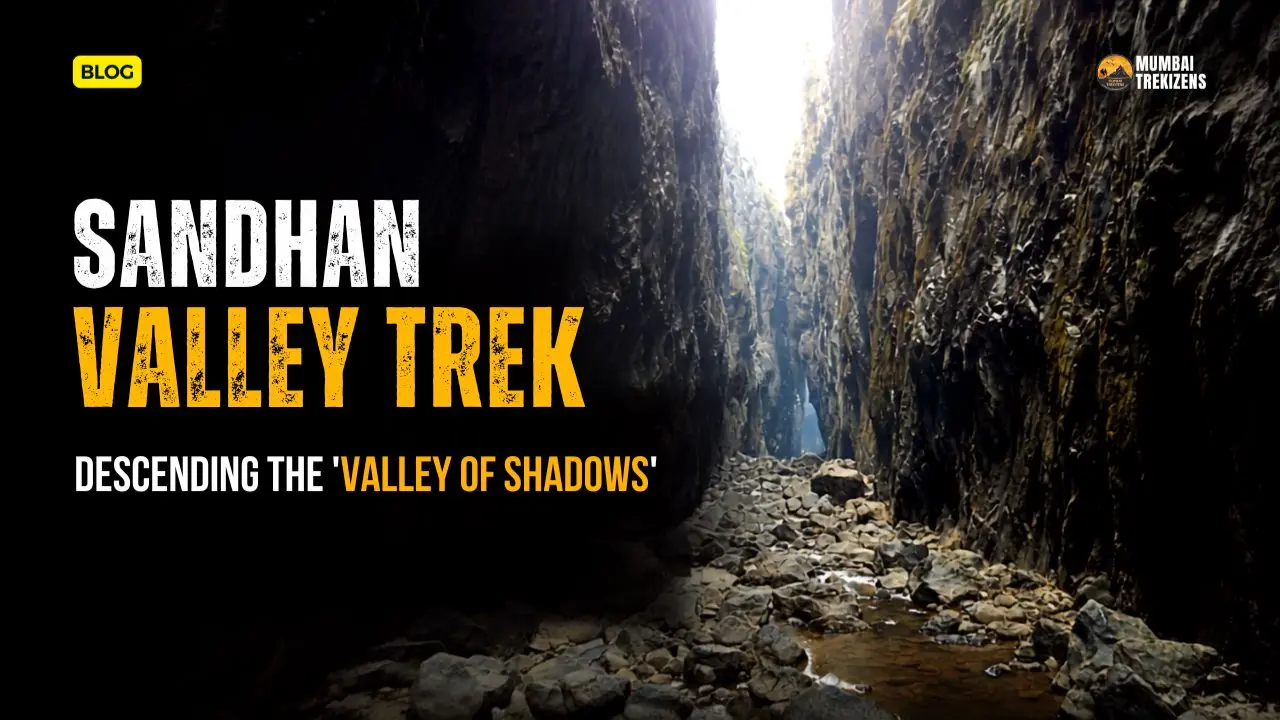
The Sandhan Valley trek is unlike any other in the Sahyadri. Instead of climbing up to a summit, you descend into a narrow, 200-foot-deep canyon where sunlight barely touches the floor. That eerie, thrilling gloom is exactly why it's called the "Valley of Shadows" (and sometimes the Valley of Suspense).
This water-carved gorge near Bhandardara stretches about 1.5 km through towering rock walls just a few meters apart in places. Add rappelling down cliff faces, wading through cold pools, and camping under a strip of stars, and you have one of Maharashtra's most adventurous and unforgettable outings.
This guide covers the route from Samrad village, the rappelling sections, difficulty, equipment, camping, best season, expenses, and the safety essentials that make this canyon adventure both thrilling and secure.
Table of Contents
- Where Sandhan Valley Is Located
- What Makes Sandhan Valley Special
- The Trek and Rappelling Sections
- Difficulty Level and Who It Suits
- Equipment You Need
- Camping at Sandhan Valley
- How to Reach Sandhan Valley
- Best Time to Visit
- Water, Food, and Facilities
- Estimated Expenses
- Safety Tips
- Practical Tips
- Common Mistakes
- Expert Insights
- Frequently Asked Questions
- Ready for Your Next Adventure?
Where Sandhan Valley Is Located
Sandhan Valley lies near Samrad village in the Bhandardara region of Ahmednagar district, Maharashtra, deep in the Sahyadri Western Ghats. It sits close to some of the range's biggest peaks, including Kalsubai, Alang, Madan, and Kulang.
The valley is a 200-foot-deep, roughly 1.5 km long canyon, carved over ages by flowing water through the rock. Samrad village at the top edge is the base for the trek, with tents, homestays, and local guides available.
Its remote, rugged setting is a big part of the appeal. This is wild, dramatic country, and reaching it feels like a genuine expedition.
What Makes Sandhan Valley Special
A few things set Sandhan Valley apart from a typical fort trek:
- It goes down, not up. You descend into a deep canyon rather than climbing a peak.
- The "Valley of Shadows" effect. The walls are so high and narrow that sunlight rarely reaches the floor, keeping it cool and dim even at midday.
- Rappelling is part of the route. You descend cliff faces on ropes, a real adventure-sport thrill.
- Water pools and rock passages. You wade through pools and squeeze between towering walls.
- Spectacular camping near the base, often beside the Bhandardara backwaters or in the wild.
It's less a walk and more an adventure course through nature's own architecture. For thrill-seekers, few Sahyadri experiences compare. If you like off-beat adventures like this, the Devkund Waterfall trek is another hidden gem.
The Trek and Rappelling Sections
The Sandhan Valley experience combines canyon trekking with rappelling. The full route covers roughly 8 to 9 km and takes about 3 to 4 hours for the core section, though full expeditions with camping run longer.
What the route involves:
- Entry from Samrad: The trail drops from the village into the canyon floor.
- Canyon walk: You move through the narrow gorge, between sheer walls, over boulders, and through cool water pools.
- Rappelling sections: The valley features rappelling descents, with the main drop around 120 feet down a cliff face. This is the adrenaline highlight, done on ropes with proper equipment and trained support.
- Boulder scrambling and wading: Between rappels, you navigate rocky patches and shallow water.
Two common formats:
- The "half trek" explores the upper canyon and returns, often without the big rappels, suitable for those wanting the scenery with less technical descent.
- The full trek/expedition includes the major rappelling sections and usually an overnight camp.
Because of the rappelling and route-finding, this trek is almost always done with an organized group and trained rope handlers, which is both the norm and the safe way to do it.
Difficulty Level and Who It Suits
Sandhan Valley is rated moderate to difficult. It's not a casual stroll; the deep rock patches, rappelling, boulder scrambling, and water crossings demand real fitness and a head for adventure.
- Suitable for: reasonably fit trekkers with some experience and an appetite for adventure activities.
- Needs care: the rappelling sections, slippery rocks, and cold water; a calm attitude toward heights and exposure helps.
- Not ideal for: absolute beginners going independently, young children, or those uncomfortable with rappelling and rough terrain.
No prior rappelling experience is required for the guided version, since trained instructors set up the ropes and coach you through. But you should be fit, comfortable following instructions, and ready for a physically demanding, hands-on day.
Equipment You Need
Rappelling and canyon terrain mean gear matters here more than on an ordinary trek.
Technical equipment (usually provided by organizers):
- Rappelling harness, helmet, ropes, carabiners, and descenders
- Trained rope handlers and safety lines at the rappelling points
Personal gear you should carry:
- Trekking shoes with excellent grip that can get wet (crucial on slick rock)
- Quick-dry clothing; you will get wet, so avoid cotton and jeans
- A dry bag or waterproof pouch for phone, documents, and a change of clothes
- A headlamp with spare batteries, essential in the dim canyon and for camping
- Water and high-energy snacks
- A small first aid kit and any personal medication
Never attempt the rappelling sections with makeshift or self-rigged gear. The technical equipment and trained handlers are what make this adventure safe, which is why going with a properly equipped organizer is essential rather than optional.
Camping at Sandhan Valley
Camping turns Sandhan Valley from a day adventure into a full expedition, and it's one of the best parts.
Camping options:
- Tents near Samrad village or at scenic spots toward the Bhandardara backwaters, often arranged by local villagers or organizers.
- Homestays and guesthouses in Samrad for a more comfortable base.
- Wild camping within the expedition on multi-day formats, with full support.
Nights here are magical: cool canyon air, star-filled skies away from any city glow, and the quiet of a remote valley. Most trekkers pair the trek with an overnight camp to soak in the setting and rest before or after the demanding descent.
How to Reach Sandhan Valley
From Mumbai
- By road, drive via Kasara and Igatpuri toward Bhandardara and Samrad village (roughly 180 to 200 km, about 6 to 7 hours).
- By train, take a train to Kasara, then hire a jeep or arrange pickup to Samrad via Bhandardara.
From Pune
- By road, via Sangamner and Akole toward Bhandardara and Samrad (roughly 180 to 195 km, about 5.5 to 6.5 hours).
Nearest Railhead
- Kasara is the most common railway station for onward road travel.
Note: Samrad is remote, and the final roads are narrow and winding. Local jeeps handle the last leg, and most trekkers reach the base early to start the descent with plenty of daylight. Pickup from Kasara or a Pune point is commonly arranged through organizers.
Best Time to Visit
- Post-monsoon and winter (October to February): The best and safest window. Water levels drop to manageable pools, the weather is pleasant, and rappelling conditions are stable.
- Summer (March to May): Also popular, with low water and warm days, though the exposed sections get hot. Early starts help.
- Monsoon (June to September): Generally avoided and often closed. Heavy rain sends water surging through the narrow canyon, which is genuinely dangerous. This is not a monsoon trek.
The canyon's water levels are the key factor. Post-monsoon through winter offers the ideal balance of scenery and safety, which is why organized batches cluster in that window. Sandhan is strictly a dry-season trek — the gorge floods dangerously in the rains, as our guide on safe river and stream crossings during monsoon explains.
Water, Food, and Facilities
Water: Carry your own drinking water (2 to 3 liters). The canyon has pools, but treat that as terrain to cross, not drinking water.
Food: Samrad village and organizers provide simple, hearty meals, often local Maharashtrian fare like bhakri, pithla, rice, and tea, especially on camping formats. Carry your own high-energy trail snacks for the descent itself.
Facilities: This is a wild, remote area. Facilities are basic, mobile signal is patchy, and you should come fully self-sufficient. That remoteness is part of the charm, and part of the reason organized logistics help so much.
Estimated Expenses
Costs depend heavily on format (half trek vs full expedition with rappelling and camping). Rough guide:
| Item | Approx Cost (per person) |
|---|---|
| Organized trek with rappelling (day) | ₹1,200 to ₹2,500 |
| Full trek with camping and meals | ₹2,000 to ₹4,000+ |
| Self-arranged transport (if independent) | ₹800 to ₹1,500 |
| Local guide and jeep (last leg) | ₹200 to ₹500 |
Because rappelling gear and trained handlers are essential, most people do this as an organized package, and the price reflects the equipment and safety support included. Always verify current rates, as they change with season and group size.
Safety Tips
- Only rappel with proper equipment and trained handlers, never self-rigged gear.
- Wear grippy shoes that can get wet; the rocks are slick.
- Keep your phone and valuables in a dry bag.
- Never attempt Sandhan Valley in monsoon, when water surges through the canyon.
- Carry a headlamp for the dim canyon and camp.
- Follow the guide's instructions exactly at rappelling points and water crossings.
- Stay with the group; the narrow, remote canyon is no place to wander alone.
- Check conditions before you go, and don't enter if heavy rain has recently fallen upstream.
This is one trek where going with an experienced, properly equipped organizer isn't just recommended, it's the sensible and safe way to do it, given the ropes, water, and remoteness.
Practical Tips
- Book with an organizer who provides certified rappelling gear and trained staff.
- Pack a full change of dry clothes in a dry bag; you will get wet.
- Start early to complete the canyon with daylight to spare.
- Camp overnight near Samrad or the backwaters for the full experience.
- Carry cash; the area is remote with no digital payment reliability.
- Combine with nearby peaks like Kalsubai or Ratangad for a bigger weekend.
- Leave no trace; carry out everything you bring into this pristine canyon.
Common Mistakes
- Attempting it in monsoon, the single most dangerous mistake here.
- Using improvised rappelling gear instead of proper equipment and handlers.
- Wearing cotton or jeans that soak and chafe in the water sections.
- Not carrying a dry bag, ruining phones and documents.
- Going independently without a guide in a remote, technical canyon.
- Underestimating the fitness needed for boulders, rappels, and water.
- Forgetting a headlamp in the dim valley and at camp.
- Littering in an untouched natural gorge.
Expert Insights
Adventure leaders who run Sandhan Valley describe it as the closest thing to canyoneering in the Sahyadri, and they're firm on one point: the safety here comes entirely from proper equipment and trained rope handlers. The rappelling sections are thrilling and completely manageable when set up correctly, which is exactly why this is a guided-only kind of trek for almost everyone.
They also stress the season above all else. Sandhan Valley in the dry months is a spectacular adventure; the same canyon in heavy monsoon is a channel for surging water and simply off-limits. Respecting that timing is non-negotiable, and reputable organizers won't run it when conditions are wrong.
Their favorite thing about the trek is the sheer novelty. Descending into a shadowed gorge, rappelling past towering walls, wading cold pools, then camping under a sliver of stars is an experience nothing else in the region matches. Done with the right team and gear, it's the kind of adventure trekkers talk about for years.
Frequently Asked Questions
1. What is the Sandhan Valley trek? It's a canyon adventure near Samrad village where you descend into a 200-foot-deep, 1.5 km gorge known as the "Valley of Shadows." It combines canyon trekking, rappelling, boulder scrambling, and water crossings.
2. How difficult is the Sandhan Valley trek? It's rated moderate to difficult, involving rappelling, slippery rocks, boulders, and cold water. It needs good fitness and a head for adventure, though no prior rappelling experience is required on guided trips.
3. How deep is Sandhan Valley? The canyon is roughly 200 feet deep and about 1.5 km long, with walls so high and narrow that sunlight rarely reaches the floor, giving it the name Valley of Shadows.
4. Do I need rappelling experience for Sandhan Valley? No. On guided treks, trained instructors set up the ropes and coach you through the rappelling, including the main drop of around 120 feet. You just need fitness and a willingness to follow instructions.
5. What is the best time for the Sandhan Valley trek? Post-monsoon and winter (October to February) is best, with manageable water and stable conditions. Summer works with early starts. Avoid monsoon entirely, when water surges dangerously through the canyon.
6. Can you camp at Sandhan Valley? Yes. Tents near Samrad or the Bhandardara backwaters, homestays in the village, and wild camping on expedition formats are all options. An overnight camp is a highlight of the experience.
7. How do I reach Sandhan Valley? Travel to Samrad village via Kasara (from Mumbai) or via Sangamner and Akole (from Pune), then a local jeep for the remote final leg. Organizers commonly arrange pickup from Kasara or a Pune point.
The Sandhan Valley trek is a rare, downward adventure into one of the Sahyadri's most dramatic landscapes: a shadowed canyon of towering walls, cool pools, and cliff-face rappels. As the "Valley of Shadows," it delivers thrills that ordinary summit treks simply can't, capped by camping under a strip of stars in wild, remote country.
Go in the dry season, never in monsoon, bring the right gear and grip, and take on the rappelling with trained hands guiding you. Do that, and Sandhan Valley becomes one of the most exhilarating adventures Maharashtra has to offer.
Ready for Your Next Adventure?
Don't just read about it — come experience it. Book your spot on the Sandhan Valley Trek with certified trek leaders, small groups, and everything organised for you.
🏷 Valley of Shadows Sahyadri, Sandhan Valley rappelling, Samrad village trek, Sandhan Valley camping, canyon trek Maharashtra, Sandhan Valley trek difficulty and rappelling
Be the first to comment on this post.